Our Method

Learning through creation

Four scenes illustrating Kanzy’s “learning through creation” approach: Learn → Create → Grow → Share.

Kanzy is built around active use, not passive repetition. Children learn new Arabic in context, then apply it through guided creation, conversation, and play so the language becomes something they can use, not just remember.
Core principles

Real life situations

Children learn everyday Arabic through familiar situations like getting dressed, eating, and going out.

Words before rules

Kids first understand and use words before learning spelling and structural rules.

Blend letters as they learn them

As soon as children know a few letters, they begin combining them to form simple words.

Letters inside meaningful words

The vocabulary children learn is chosen to include the letters they are learning.

Speaking from the start

Students start using simple Arabic sentences from the beginning, so speaking develops alongside reading and writing.

Create, not just repeat

Children use what they learn to build and expand their virtual world, instead of only repeating words and exercises.

Curriculum overview

A clear structure, built around practice

Kanzy’s Arabic curriculum connects themes, letter learning and language skills across units. Each unit ends with a project that puts everything learned in that unit into practice.

The opening units, shown as an example of how the curriculum fits together.

Swipe across to explore the units.

Example of how Kanzy’s Arabic curriculum connects themes, letter groups, sentence patterns, reading skills and end-of-unit projects.
Themes My room and my home My school
Units
Unit 1
Unit 2
Unit 3
Unit 4
Letter group م ب ل ن د ت ر س ف أ ج ح خ ك ش ز
Inside each
letter
Letter sounds

Fatha, damma, kasra and sukoon. Modood are introduced in later units.

Letter forms

Recognise and write the letter in different word positions.

Words and meaning

Connect the letter to words and their meanings.

Sentence
patterns

Sentence patterns are introduced progressively across the units, then revisited and extended with new vocabulary.

Reading skills
Break words into soundsJoin sounds to read words

Segmentation and then blending are introduced progressively across the units as children learn more letters and words.

End-of-unit
project
Room tour video

Use everything learned in unit 1.

Word maze

Use everything learned in unit 2.

Family tree

Use everything learned in unit 3.

Dream school broadcast

Use everything learned in unit 4.

Developing
together
  • Reading
  • Writing
  • Listening
  • Speaking

Practised together throughout the curriculum.

Practice kids look forward to

The curriculum comes to life through a growing library of 25+ fun, teacher-guided activities. In every lesson, children learn and practice through play and building in their virtual world.

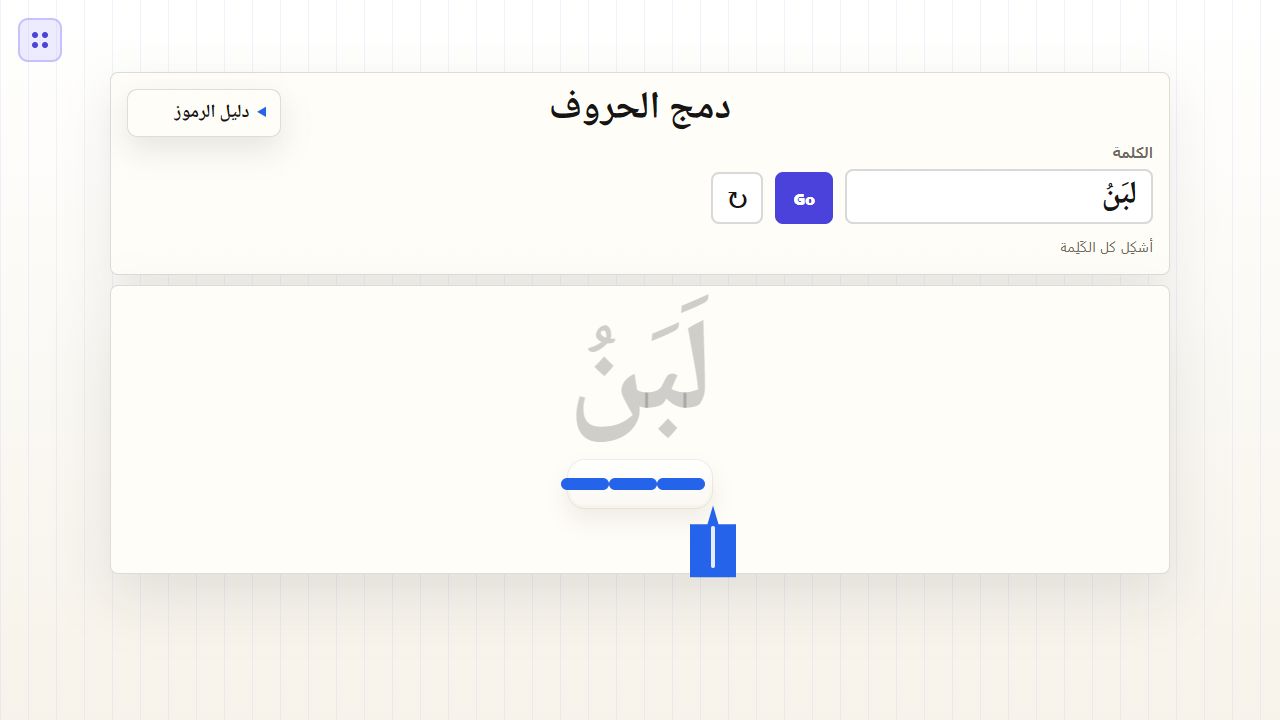
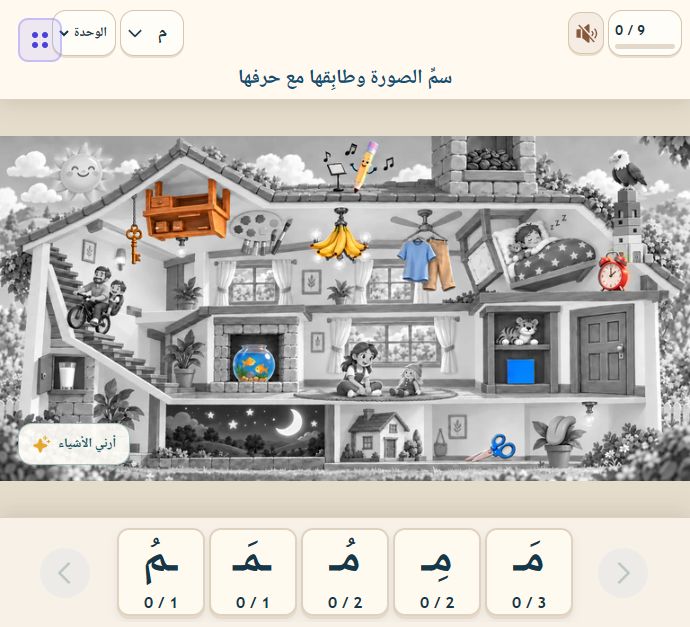
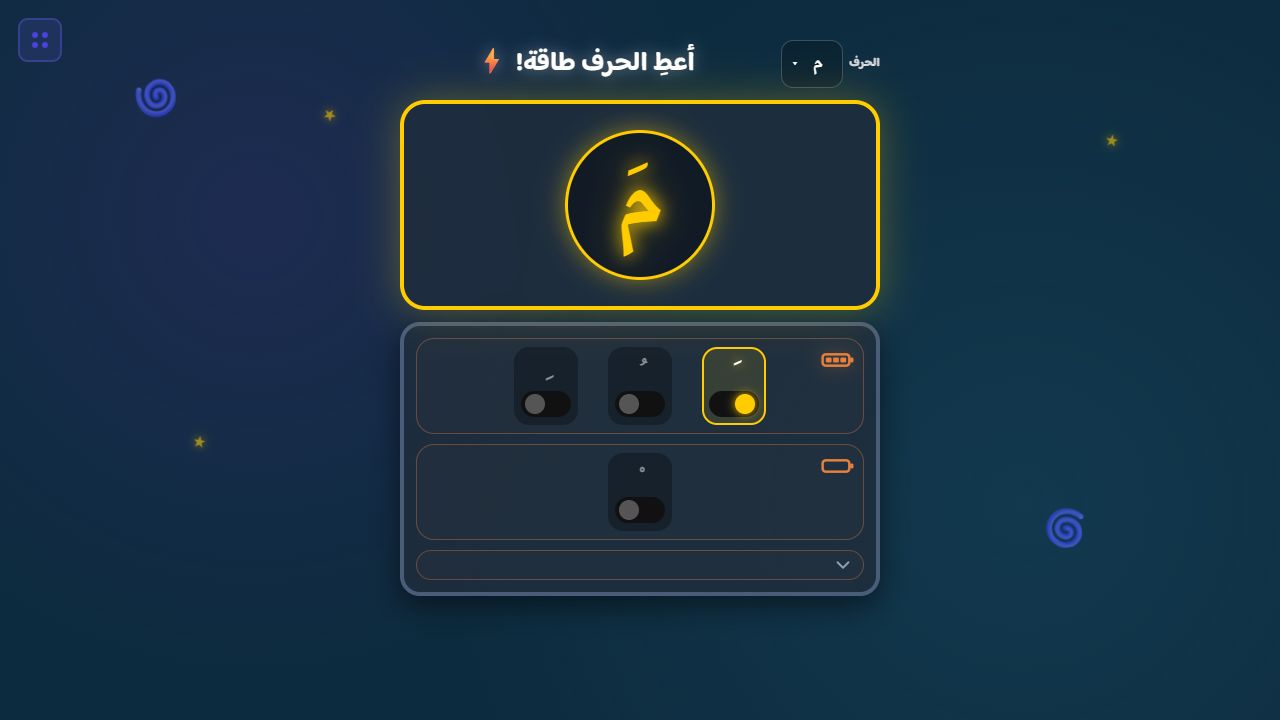
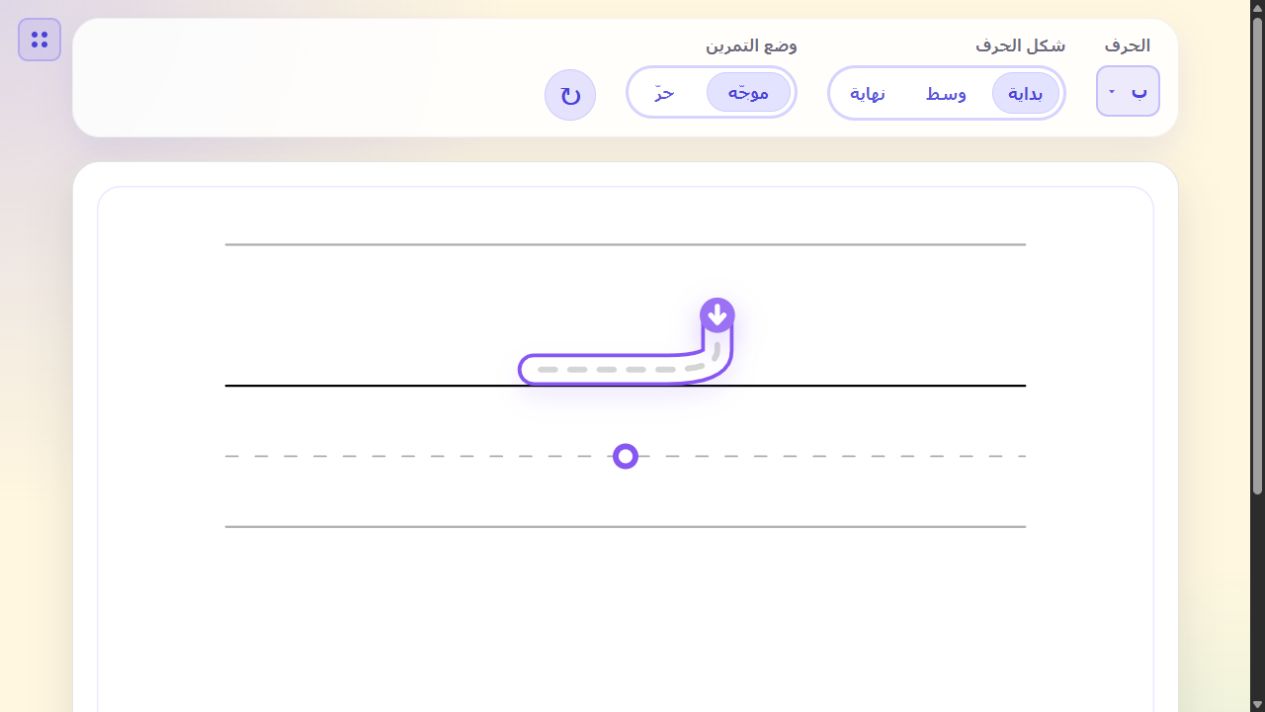
Kanzy letter-sound activity showing the Arabic letter م with vowel marks and sound controls. Guided tracing of the Arabic letter ب, with arrows showing the writing direction. Arabic blending activity showing how letter sounds join to form the word لَبَنٌ. Arabic picture-matching activity with household objects and different vowel forms of the letter م.

Fun activities

Activities range from sound games, tracing, blending and stories to creative voice-overs where children describe funny scenes and add their own sound effects.

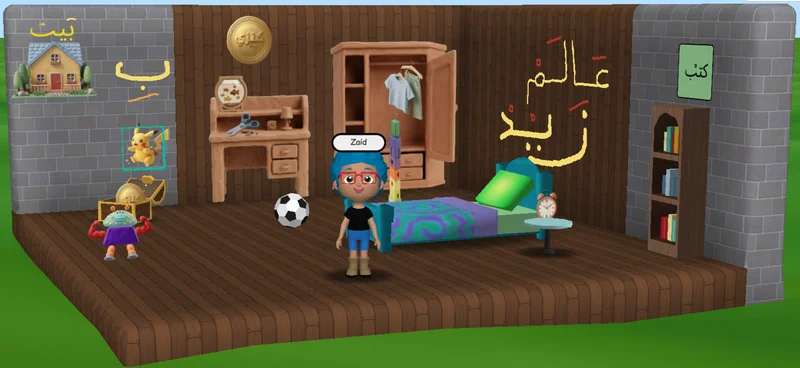
A child’s virtual bedroom in Kanzy, with his toys and belongings labelled in Arabic and his avatar standing in the room.

Their virtual world

Build, describe and interact using the Arabic they are learning.

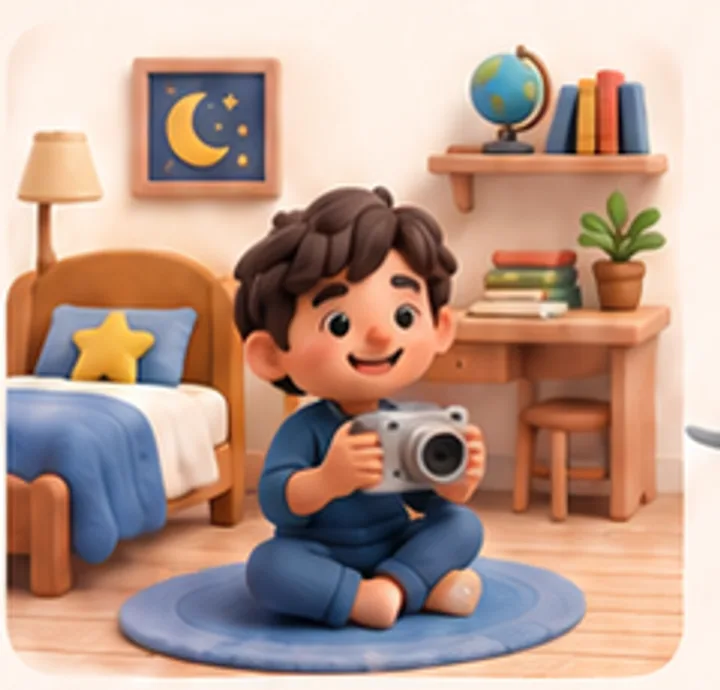
Clay illustration of a child holding a camera in a furnished bedroom.

End-of-unit projects

Bring everything learned in the unit together in a finished project.

Ready to try a free lesson?

Help your child build confidence using Arabic in everyday life.

Book a free trial lesson

No card required. First month refundable if it is not the right fit.